press

Debunking Myths About Spine Surgeries

Learn From Our Experts

Our practice combines the knowledge of world-renowned experts across specialties. See their take on the latest industry news and advice.
Patient Education

Debunking Myths About Spine Surgeries

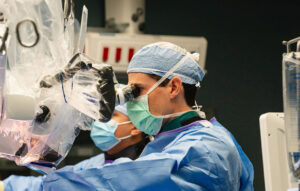
It’s normal to be nervous about having surgery, but spine surgeries often evoke fear and anxiety due to many myths and misconceptions that have circulated. These myths can deter patients from seeking necessary treatment or create unnecessary stress for those who need surgery. Let’s debunk some of the most common myths about spine surgeries. Video: How DISC Helps Patients Overcome Pain Myth 1: All Spine Surgeries Are Major Procedures Reality: Not all spine surgeries are major procedures. Many spine conditions can be treated with minimally invasive techniques, which involve smaller incisions, less tissue damage, and quicker recovery times. Many procedures can effectively address issues without the need for extensive surgery.

Patient Education

Low Back Pain: When to See a Spine Surgeon

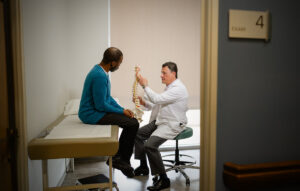
You get out of bed and feel a stinging pain. You bend down and there’s a pinching sensation. You stand up after a long day of sitting in an office chair, and the soreness hits you. Lower back pain affects everyone at some point, but when is it time to seek help? Video: DISC Patient, Jeff Before seeking treatment at DISC, Jeff suffered from debilitating lower back pain. While many cases of back pain resolve on their own with conservative treatments, there are times when seeing a spine surgeon is necessary. Understanding when to seek specialized care can make a significant difference in your recovery and long-term spinal health, so

Patient Education

Introduction to Spinal Cord Stimulators

Spinal cord stimulators (SCS) are a specific type of neurostimulator, a medical device designed to modulate neural activity by delivering electrical impulses to specific parts of the nervous system. Spinal cord stimulators work to manage chronic pain by sending electrical impulses to the spinal cord. These devices are implanted in the body and help to mask pain signals before they reach the brain. By doing so, spinal cord stimulators can significantly improve the quality of life for patients suffering from chronic pain or neuropathic pain conditions that have not responded to other treatments. Video: Dr. Alexander Hersel on Spinal Cord Stimulation Symptoms Indicating the Need for Spinal Cord Stimulation The

Patient Education

Artificial Disc Replacement: A New Option for Spinal Fusion

Artificial disc replacement (ADR)  is a surgical procedure that involves replacing a damaged intervertebral disc in the spine with an artificial disc. This procedure is typically considered for patients with chronic discogenic pain or degenerative disc disease that has not responded to conservative treatments. The goal of ADR is to maintain spinal mobility and stability while alleviating pain, which may make it a better option for patients over spinal fusions. During a fusion, doctors fuse vertebrae together, limiting mobility at the newly fused spot. Video: ADRs vs. Fusions   Symptoms: Patients who may be candidates for artificial disc replacement often present with symptoms such as: Chronic Back Pain: Persistent pain

Patient Education

Common Sports Medicine Injuries and Prevention

Playing sports is a great way to maintain physical fitness in a fun and challenging environment, build and maintain teamwork skills, and enjoy healthy competition. However, all sports come with the risk of injury. Understanding common sports injuries and how to prevent and treat them is essential for athletes, coaches, and their support teams. Here’s an overview of some of the most common injuries in sports medicine, along with tips on prevention and treatment. Video: Sports Medicine Expert, Dr. William Workman 1. Sprains and Strains Sprains involve the stretching or tearing of ligaments—the tough bands of fibrous tissue that connect bones to each other. While strains, on the other hand,

Patient Education

How Good Postural Balance Can Prevent Equestrian Injury

Equestrianism is a high-risk sport — one in five riders will get injured at some point in their equestrian career, according to a study performed by the Department of Surgery at Oregon Health and Science University. As a spine surgeon, I see dozens of equestrian patients per year with injuries of all different levels of severity.  Video: Sagittal Imbalance Versus Equestrian Performance   Luckily, there’s something riders can do as a preventive against injury: ensure good postural balance. A rider’s core balance is essential to both preventing falls and severe injuries. Most know balance is a vital part of horseback riding, but few realize just how much an imbalanced spine

Patient Education

What is PRP? A Q&A with Dr. Vivek Barbaria

Platelet-rich plasma (PRP) therapy is a cutting-edge treatment that has shown promising results in promoting tissue regeneration and healing for a variety of conditions, including orthopedic injuries, musculoskeletal injuries, arthritis and chronic pain. PRP is a concentrated solution derived from your own blood that contains a high concentration of platelets, which are rich in growth factors and other proteins that promote healing and tissue regeneration. The PRP solution is obtained by taking a small sample of your blood, processing it in a centrifuge to concentrate the platelets, and then injecting the PRP into the treatment area. When PRP is injected into injured or damaged tissue, it releases growth factors that

Patient Education

Saddle Up for Success: Sagittal Imbalance Versus Equestrian Performance

In the world of equestrian sports, the rider must coordinate with their horse to perform in sync. It’s a full body exercise, not just for the horse, but for the rider too, as their fitness, balance and stamina are all put to the test. Spinal alignment is more critical in equestrian than in any other sport because the rider’s connection with their horse starts with the seat in the saddle is the primary means of communication, and spinal alignment and stability are the building blocks of that connection. Imagine a plumb line running from the base of the rider’s skull to the connection between their lower back (lumbar) and their

Patient Education

Is it Time for a Second Opinion?

Often times, patients suffering from back and/or neck pain are told the only option they have is an invasive procedure, like a spinal fusion. It’s crucial that patients seek second opinions, especially when told to go down a more-invasive treatment path. While DISC strictly follows a conservative care strategy, where the least invasive modalities are deployed first, some other groups are not as adherent to conservative treatment. If you are among the thousands suffering from chronic pain and limited mobility, it may be time to schedule a second opinion. Less invasive procedures (like pain blocks) often help patients overcome their pain with easier recoveries; and for more severe spine cases,

Patient Education

Cervical Disc Replacement Proves Superior to ACDF After 10 Years

A recent study published in the International Journal of Spine Surgery has found that cervical artificial disc replacement (C-ADR) is a superior option to anterior cervical discectomy and fusion (ACDF) for treating symptomatic cervical degenerative disc disease. C-ADR involves removing the damaged disc and replacing it with an artificial disc, while ACDF fuses the vertebrae together using bone grafts. While both procedures are effective, C-ADR offers the advantage of preserving motion in the treated area. Maintaining motion is particularly important for younger patients, as it can reduce the risk of adjacent segment degeneration. The study followed patients for 10 years and found that those who underwent C-ADR had a higher

Our Locations