
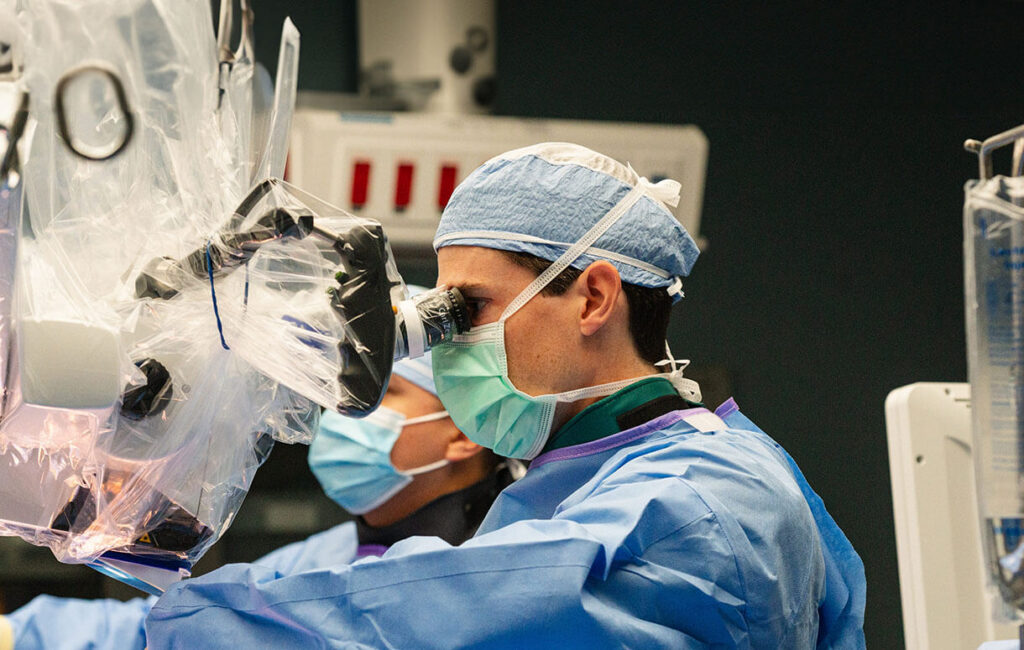
Artificial disc replacement (ADR) is a surgical procedure that involves replacing a damaged intervertebral disc in the spine with an artificial disc. This procedure is typically considered for patients with chronic discogenic pain or degenerative disc disease that has not responded to conservative treatments. The goal of ADR is to maintain spinal mobility and stability while alleviating pain, which may make it a better option for patients over spinal fusions. During a fusion, doctors fuse vertebrae together, limiting mobility at the newly fused spot.
Video: ADRs vs. Fusions

Symptoms:
Patients who may be candidates for artificial disc replacement often present with symptoms such as:
- Chronic Back Pain: Persistent pain in the neck (cervical spine) or lower back (lumbar spine) that affects daily activities.
- Radicular Pain: Pain that radiates down the arms or legs, indicating nerve root compression.
- Numbness and Tingling: Sensations of numbness or tingling in the extremities.
- Muscle Weakness: Weakness in the arms or legs, depending on the affected spinal segment.
- Limited Mobility: Reduced range of motion and stiffness in the affected area of the spine.

Benefits of Artificial Disc Replacement over Spinal Fusion:
While sometimes spinal fusions are necessary for certain patients, usually artificial disc replacements are a better option. Some benefits of receiving an artificial disc replacement over a spinal fusion include:
- Preservation of Motion:
- Artificial disc replacement allows for the maintenance of natural spine motion, which can prevent adjacent segment degeneration—a common issue with spinal fusion where the segments above and below the fusion site can become stressed and degenerate over time.
- Reduced Stress on Adjacent Segments:
- By preserving motion at the operated level, artificial disc replacement reduces the biomechanical stress on adjacent vertebral segments, potentially lowering the risk of future degeneration in these areas.
- Quicker Recovery and Rehabilitation:
- Patients often experience a quicker return to normal activities compared to spinal fusion because artificial disc replacement involves less disruption of the natural spinal mechanics.
- Lower Risk of Hardware Complications:
- Artificial disc replacement eliminates the need for spinal instrumentation such as rods and screws used in fusion, reducing the risk of hardware-related complications like screw loosening or breakage.
- Improved Pain Relief:
- Many patients report better pain relief and functional outcomes with ADR compared to spinal fusion, likely due to the preservation of normal spine dynamics.

Treatment:
When conservative treatments such as physical therapy, medications, and injections fail to provide adequate relief, it may be time for an artificial disc replacement.
An artificial disc replacement starts with a comprehensive evaluation including a physical examination, going over a patient’s medical history, and imaging studies (MRI, CT scans) to determine the suitability for artificial disc replacement. During this phase, the surgeon will discuss the potential risks, benefits and alternatives to the procedure to make sure an artificial disc replacement is the right fit.
Here’s an overview of the steps taken during the procedure:
- Incision: The surgeon makes an incision in the front (anterior) of the neck for cervical disc replacement or the abdomen for lumbar disc replacement.
- Removal of Damaged Disc: The damaged intervertebral disc is carefully removed to decompress the spinal cord and nerve roots.
- Insertion of Artificial Disc: The artificial disc, designed to mimic the natural disc’s movement and cushioning, is inserted into the disc space.
- Closure: The incision is then closed, and the patient is moved to the recovery area.

Recovery:
- Postoperative Care: Immediately after the operation, pain management will begin with medications and monitoring for any complications. At DISC, artificial disc replacements are minimally-invasive out-patient procedures, so patients will be able to return home the same day.
- Rehabilitation: Rehabilitation from an artificial disc replacement includes a gradual increase in activity levels with guidance from a physical therapist and exercises that are aimed at improving strength, flexibility, and range of motion without compromising the surgical site. Simultaneously, patients should avoid heavy lifting, twisting, or bending during the initial recovery phase.
- Long-term Recovery: Most patients can return to normal activities within a few weeks to months, depending on the extent of surgery and individual healing rates. Regular follow-up appointments will be scheduled to monitor progress and address any issues.
Artificial disc replacement offers a promising alternative to spinal fusion for patients with specific types of degenerative disc disease or discogenic pain. By preserving spinal motion and reducing stress on adjacent segments, artificial disc replacement can provide significant pain relief and improved quality of life with potentially fewer long-term complications. Patients considering artificial disc replacement should discuss their options with a spine surgeon to determine the best treatment approach based on their specific condition and overall health, knowing that spinal fusion may still be their best option for getting back to living pain-free.
Schedule a consultation with one of DISC’s leading spine surgeons to discuss your options today.
Related article: https://www.discmdgroup.com/spinal-conditions/spinal-fractures/



