press

Learn more about Lumbar Fusion Surgery

Learn From Our Experts

Our practice combines the knowledge of world-renowned experts across specialties. See their take on the latest industry news and advice.
Patient Education

Learn more about Lumbar Fusion Surgery

Lumbar Fusion Overview: Lumbar fusion surgery, also known as spinal fusion surgery,  is a procedure designed to “weld” adjacent vertebrae into one solid bone in the lower back (lumbar spine), eliminating motion and stabilizing the part of the spine that’s causing pain. The goal is to reduce pain and address instability caused by various conditions, such as degenerative disc disease, spondylolisthesis, spinal stenosis, or fractures. Video: Lumbar ADR (Fusion Alternative) Patient, Jeff   Some patients who should consider spinal fusion include: Patients with spondylolisthesis, a condition where  one bone of the spine slips over another, out of its proper place. It can lead to symptoms such as back pain and


Patient Education

Learn More About Lumbar Stenosis

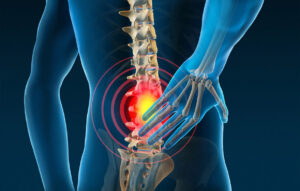
Lumbar spinal stenosis is the narrowing of the spinal canal in the lower back, typically due to age-related changes or structural issues. It causes the small spaces between the vertebrae to become constricted, putting pressure on the spinal cord and nerves that travel through the lower back into the legs.  Spinal stenosis is often made worse by conditions such as osteoarthritis, degenerative disc disease, thickened ligaments, bone spurs, or herniated discs. Other lifestyle risk factors such as smoking, obesity, and even poor posture can also contribute to the development of lumbar spinal stenosis. Lumbar Stenosis Symptoms: Common symptoms of lumbar spinal stenosis include: Pain: Pain may be dull or sharp

Patient Education

Learn More About Sciatica: What It Is and How To Treat It

Sciatica is a term used to describe symptoms rather than a specific medical condition. It’s typically caused by irritation or compression of the sciatic nerve, which is the largest nerve in the body that runs from the lower back down the back of each leg. Sciatica symptoms – such as pain, numbness and muscle weakness in the affected leg – are often caused by problems with your lower spine, such as a herniated disc or a bone spur. Sciatica Symptoms: The most common symptoms of sciatica include: Pain: Sciatic pain often begins in the lower back and radiates down one leg. It can be sharp, shooting, or burning, and typically

Patient Education

Learn More About Degenerative Disc Disease

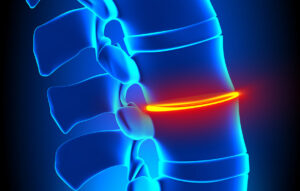
Degenerative disc disease is a common condition that affects the discs between the spinal vertebrae. These discs act as shock absorbers between the vertebrae allowing for flexibility and cushioning. But with degenerative disc disease, one or more of the intervertebral discs begins to deteriorate because of injury or aging, causing loss of flexibility and height to cushion the spine. Degenerative disc disease is part of the natural aging process, but the deterioration is worse for some than others. It has been reported that up to one-third of people 40-59 have image-based evidence of moderate to severe degenerative disc disease, with the prevalence increasing as we age and discs begin to

Spine

What is a Herniated Disc?

A herniated disc is a painful, often debilitating condition where a fragment of the soft nucleus of an intervertebral disc pushes through the tough outer annulus. In other words, the tissue between vertebrae ends up where it shouldn’t be. In many cases, herniated discs pinch the nerve roots near the vertebrae, resulting in burning, tingling and/or numbness. While herniated discs can greatly impair a patient’s quality of life, there are many treatment paths that can get patients back to being pain-free. Herniated Discs 101 Every year, around 3 million patients seek care for herniated discs in the United States. And though the condition is common, its effects can often manifest

Our Locations