
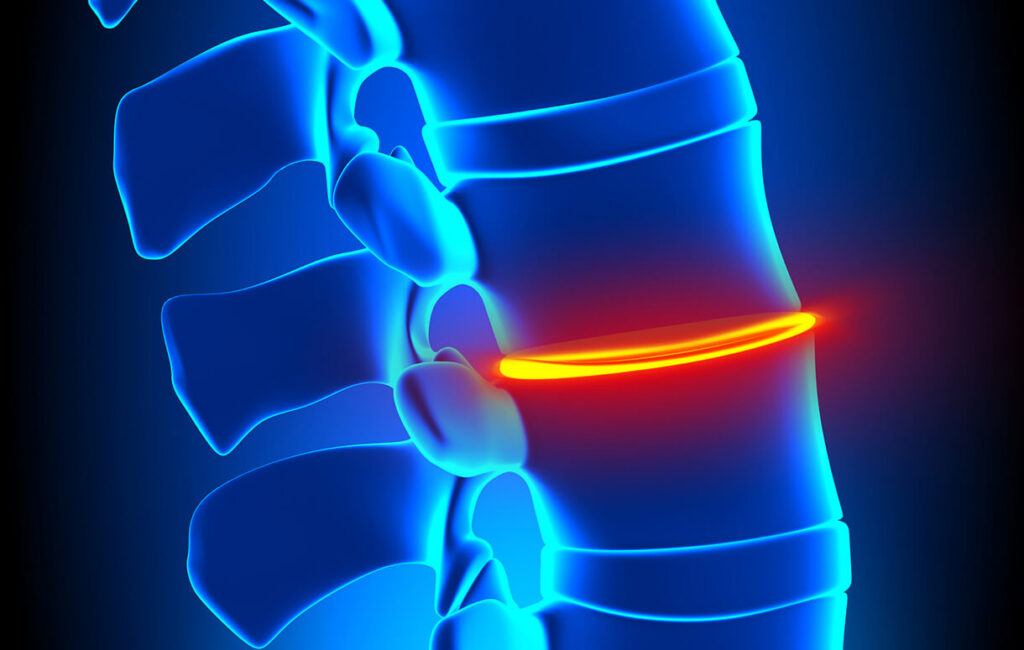
Degenerative disc disease is a common condition that affects the discs between the spinal vertebrae. These discs act as shock absorbers between the vertebrae allowing for flexibility and cushioning. But with degenerative disc disease, one or more of the intervertebral discs begins to deteriorate because of injury or aging, causing loss of flexibility and height to cushion the spine.
Degenerative disc disease is part of the natural aging process, but the deterioration is worse for some than others. It has been reported that up to one-third of people 40-59 have image-based evidence of moderate to severe degenerative disc disease, with the prevalence increasing as we age and discs begin to dehydrate and wear down.
As discs deteriorate and vertebrae draw closer together, joints may begin to rub excessively, causing painful bone spurs and nerve damage. Depending on the severity of the condition, it can lead to long-term issues such as arthritis, herniated discs, or spinal stenosis.
Degenerative Disc Disease Symptoms:
Some people with the condition present few to no symptoms of degenerative disc disease, while others struggle with symptoms such as:
- Chronic, Dull or Aching Pain: Chronic, dull or aching pain in the lower back and neck is a hallmark symptom. It can vary from mild to debilitating and may be exacerbated by lifting, twisting, bending or prolonged sitting.
- Radiating Pain: Pain can sometimes radiate into the arms, hands, buttocks, hips, and thighs. This is often referred to as sciatica if it affects the sciatic nerve.
- Numbness and Tingling: Numbness or tingling in the legs can occur if a degenerated disc presses on nearby nerves.
- Weakness: Muscle weakness in the arms, legs, and/or feet can result from nerve compression, affecting balance and mobility.
Degenerative Disc Disease Treatment:
Degenerative disc disease treatment typically starts with conservative, non-surgical measures and may progress to surgical intervention if necessary.
Common non-surgical treatment options include:
- Physical therapy that includes stretching, strength training and stability exercises to strengthen the core and improve posture and mechanics
- Anti-inflammatory drugs and over-the-counter pain relievers
- Corticosteroid injections to reduce inflammation and alleviate pain and stiffness
- Lifestyle modifications, such as weight management, exercise, and proper body mechanics
With severe cases, and/or when conservative care doesn’t do the trick, it may be time to consider surgery for pain relief. Common surgical options include:
- Artificial Disc Replacement: A procedure to replace degenerative disc(s) with a medical device designed to function just like a normal disc, which helps relieve pressure on surrounding nerves and preserves motion at the level of the spine.
- Spinal Fusion: A common procedure that involves permanently fusing vertebrae to inhibit normal movement and minimize pain.
Degenerative Disc Disease Recovery:
Recovery from degenerative disc disease treatment varies based on the chosen approach. With non-surgical treatments, many people experience relief from their symptoms within a few weeks or months. Physical therapy and ongoing exercises are often recommended to maintain spinal health.
DISC’s spine surgeons regularly perform these minimally invasive out-patient procedures, allowing most patients to return home the same day and to recover much more quickly than when using traditional techniques. Performing minimally invasive surgeries lead to smaller incisions, faster recovery, and fewer complications than traditional spine surgery.
It’s essential to consult with a spine specialist to determine the best treatment for your unique needs. Schedule a consultation with one of DISC’s leading spine experts to learn more and get back to living a pain-free life.
Video: Degenerative Disc Disease Patient, Tonee



