press

8 Treatment Options for a Herniated Disc: From Physical Therapy to Surgery

Learn From Our Experts

Our practice combines the knowledge of world-renowned experts across specialties. See their take on the latest industry news and advice.
Patient Stories

8 Treatment Options for a Herniated Disc: From Physical Therapy to Surgery

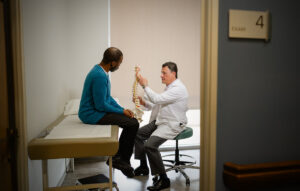
In this article, we’ll take a high-level look at the types of treatments available for patients suffering from disc herniations. The headline is this: many patients do not need surgery. There are many conservative (meaning less invasive) ways to treat herniated discs that often work wonderfully. So let’s take a look starting with the least invasive options. 1. Controlled Rest and Activity Modifications When a herniated disc flares up, every instinct tells you to lie down and wait it out. It’s an understandable response — but prolonged bed rest is one of the most outdated approaches in spine care. Research has shown that extended bed rest offers no benefit over

Patient Stories

Lumbar Disc Replacement Surgery: What You Need To Know

Living with relentless lower back pain can touch every part of your life—how you work, sleep, move, and even how you show up for the people you love. Lumbar disc replacement is designed to change that trajectory by removing a worn, painful disc in your lower spine and replacing it with an artificial disc that preserves motion instead of locking the spine in place. In other words, the goal is not just to reduce pain, but to help you bend, twist, and move with more freedom again. At DISC, our surgeons have performed more than 1,000 artificial disc replacements across our Southern California outpatient surgery centers, bringing deep experience and

Patient Education

Understanding Tethered Cord Syndrome: Causes, Symptoms, and Treatments

At DISC Sports & Spine Center, our multidisciplinary team of neurosurgeons and spine specialists treats a wide range of spinal disorders, from common back pain to complex neurological conditions. Among these is tethered spinal cord syndrome (TSCS), a rare but serious spinal condition that can cause chronic pain, neurological deficits, and mobility issues if left untreated. Understanding what tethered cord is and how it can be treated can make a significant difference in long-term outcomes. Video: DISC Patient, Neil   Neil suffered from a spinal condition that required surgical intervention by DISC specialist Dr. Luke Macyszyn.   What Is Tethered Cord Syndrome? The spinal cord normally floats freely within the

Patient Education

8 Questions to Ask Before Choosing a Spine Surgeon

Whether you’ve already been diagnosed with a condition like spinal stenosis or a herniated disc, or even if you have undiagnosed back pain, choosing a spine surgeon is a big decision that can significantly impact your health and quality of life. With many providers available, it’s essential to ensure you select a highly qualified and experienced professional. Here are a few questions you should ask before making your decision: Video: How DISC Helps Patients Overcome Pain 1. What Are Your Qualifications and Certifications? Understanding a surgeon’s qualifications is an important first step to feel comfortable and confident in your care. Ensure your spine surgeon is board-certified and has specialized training

Patient Education

10 Signs That It’s Time to See a Spine Surgeon

Back or neck pain can significantly impact your quality of life, and understanding when to seek professional help is essential for effective treatment and recovery. Symptoms like pain, numbness or tingling, and limited mobility may be a sign that it’s time to seek professional help. Here are ten signs that suggest it’s time to consult a spine surgeon: Video: How DISC Helps Patients Overcome Pain 1. Persistent Back, Neck, and/or Nerve Pain Pain is the body’s way of signaling that something is wrong. If you’ve been experiencing persistent back or neck pain that hasn’t improved with conservative treatment options like rest, physical therapy, or over-the-counter medications, it’s time to seek

Patient Education

Learn more about Tethered Spinal Cord Syndrome

Tethered spinal cord syndrome (TSCS) is a neurological disorder characterized by an abnormal attachment of the spinal cord to surrounding tissues, typically at the base of the spine. This abnormal tethering restricts the normal movement of the spinal cord within the spinal canal, leading to stretching and compression of the spinal cord and nerve roots.  Tethered spinal cord syndrome can occur congenitally, meaning it is present at birth, or it can develop later in life due to conditions such as spinal cord injury, spinal deformities, or prior spinal surgeries. Video: DISC Patient, Neil Neil suffered from a spinal condition that required surgical intervention by DISC specialist Dr. Luke Macyszyn. Tethered

Patient Education

Learn more about Radiculopathy

Radiculopathy, colloquially called a “pinched nerve,” is a condition where the nerve roots coming out of the spinal cord become compressed or inflamed, leading to pain, weakness, numbness, or tingling along the path of the affected nerve.  Radiculopathy typically occurs when there is pressure on the nerve roots caused by conditions such as herniated discs, bone spurs, spinal stenosis, or other degenerative changes in the spine. This compression can lead to irritation, inflammation, or even damage to the nerves, resulting in symptoms that radiate along the nerve’s pathway. Video: Radiculopathy Patient, Jeff Jeff suffered from debilitating back pain caused by a pinched nerve in his spine. He sought treatment by

Patient Education

5 Myths About Spine Surgery

When faced with the prospect of spine surgery, it’s natural to feel apprehensive and uncertain. Misconceptions and myths can often cloud our judgment, influencing our decisions and potentially deterring us from seeking the care we truly need. We’re debunking five common myths about spine surgery to give you the clarity and insight necessary to make informed decisions about your health. Video: Meet the Patient, Hector 1. “I’ll be debilitated for the rest of my life.” Every DISC physician is a pioneer in their respective speciality, which is what makes our team the leading care provider for sports injuries, orthopedic issues, and spine disorders. We work with a range of patients

Patient Education

When to Consider a Second Opinion for Spine Surgery

Spine surgery is a serious procedure to undergo, so it makes sense why patients may consider getting a second opinion for additional insights in order to make a well-informed decision about their treatment. Oftentimes, patients suffering from chronic back and/or neck pain are told the only option is an invasive procedure, but that’s not always the case. DISC strictly follows a conservative care strategy where least invasive treatments are tried first, but other groups may not adhere to the same treatment strategies. Video: How DISC Helps Patients Overcome Pain Getting a second opinion for spine surgery can serve as a valuable tool for making well-informed decisions about your health. Here

Patient Education

Top 10 Tips for Finding a Spine Surgeon You Can Trust

Undergoing spine surgery is a big deal, which is why it’s vital to find a surgeon you can trust. At DISC, we want you to feel confident in your diagnosis and treatment plan — and that starts with finding a care team that’s committed to getting you back to living life pain-free. Video: How DISC Helps Patients Overcome Pain With a million different options for providers and treatments, it can be confusing to know what is best for you, so we’ve put together our top 10 tips for finding a spine surgeon you can trust: 1. Look for an experienced, board-certified surgeon who specializes in the procedure you need  Finding

Our Locations