
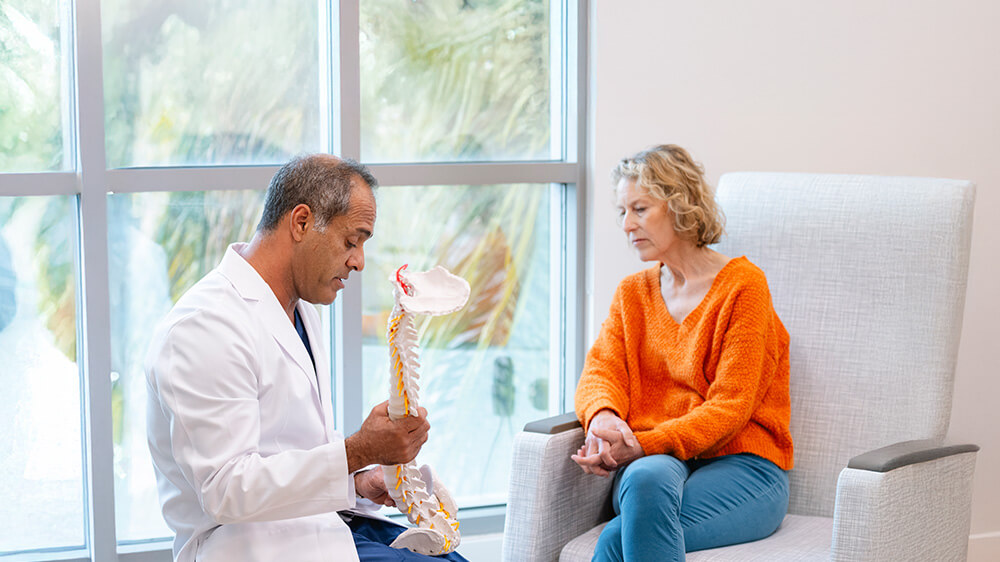
At DISC Sports & Spine Center, our multidisciplinary team of neurosurgeons and spine specialists treats a wide range of spinal disorders, from common back pain to complex neurological conditions. Among these is tethered spinal cord syndrome (TSCS), a rare but serious spinal condition that can cause chronic pain, neurological deficits, and mobility issues if left untreated. Understanding what tethered cord is and how it can be treated can make a significant difference in long-term outcomes.
Video: DISC Patient, Neil
Neil suffered from a spinal condition that required surgical intervention by DISC specialist Dr. Luke Macyszyn.
What Is Tethered Cord Syndrome?
The spinal cord normally floats freely within the spinal canal, surrounded by cerebrospinal fluid. This mobility allows it to move up and down with everyday motion and growth. In patients with tethered cord syndrome (TCS), however, the spinal cord becomes abnormally attached (or “tethered”) to the surrounding tissues of the spine. This abnormal fixation limits the spinal cord’s ability to move and stretch normally.
As a result, the spinal cord can become stretched and damaged over time, particularly during periods of growth in children, or through normal movement in adults. The tension placed on the cord may affect the nerves that control movement and sensation in the legs, bladder and bowel, leading to a range of neurological and musculoskeletal symptoms.

“Tethered cord is a unique condition because the spinal cord isn’t just compressed, it’s literally anchored in place. When we release that tension, patients often regain strength, sensation, and control they thought were gone for good.”
– Dr. Mark Liker | Neurosurgeon
Types and Causes of Tethered Cord Syndrome
Tethered cord syndrome can be congenital (present at birth) or can come later in life.
- Congenital tethered cord often occurs in association with spina bifida, especially a mild form called spina bifida occulta. It may also involve structural abnormalities like lipomas (fatty tissue attachments), thickened filum terminale (a band of tissue anchoring the cord), or other malformations that fix the spinal cord in place.
- Acquired tethered cord can develop after spinal surgery, trauma, or infection, or due to scar tissue that forms and tethers the spinal cord to the spine’s inner surfaces. Adults who have undergone previous procedures for spina bifida repair may also develop a recurrent tethered cord later in life.
Common Symptoms of Tethered Cord Syndrome
Symptoms of tethered cord syndrome vary widely depending on the patient’s age and the severity of tethering.
In children, signs may include:
- Back pain, especially in the lower spine
- Leg weakness, stiffness, or deformities
- Changes in gait (walking pattern) or balance
- Foot abnormalities (such as high arches or curled toes)
- Bowel or bladder dysfunction
- A visible fatty lump, dimple, or patch of hair on the lower back
In adults, tethered cord syndrome may present differently. Because the spine has already developed, adults typically experience progressive neurological symptoms, such as:
- Chronic lower back pain
- Radiating pain, numbness, or tingling in the legs
- Muscle weakness or atrophy
- Loss of sensation
- Sexual dysfunction
- Worsening bladder or bowel control
It’s important to note that adult tethered cord syndrome can sometimes be misdiagnosed as other spinal conditions, such as herniated discs or spinal stenosis, making evaluation by an experienced spine specialist especially important.

How Tethered Cord Syndrome Is Diagnosed
Diagnosis typically begins with a detailed neurological exam and patient history. Imaging studies are crucial, especially getting an MRI (Magnetic Resonance Imaging), which provides a clear view of the spinal cord, nerve roots and surrounding tissues. In some cases, CT scans or ultrasound (for infants) may be ordered as supplementary tools.
Because the symptoms of tethered cord syndrome can overlap with other spinal conditions, it’s important for diagnosis and management to be guided by specialists familiar with complex spinal anatomy, such as our board-certified surgeons at DISC Sports & Spine Center.
Treatment Options
Treatment for tethered cord syndrome depends on the severity of symptoms and the degree of spinal cord tension.
- Observation and Conservative Management: In mild or asymptomatic cases, doctors may recommend monitoring rather than immediate surgery. Regular neurological exams and imaging help ensure that any progression is caught early. Pain management, physical therapy and activity modification may also help manage minor symptoms.
- Surgical Treatment: Tethered Cord Release: When symptoms worsen or neurological deficits appear, surgical intervention is typically recommended. The standard procedure is called tethered cord release surgery, in which a neurosurgeon carefully frees the spinal cord from the tissue that is restricting it.
This delicate microsurgical procedure helps relieve tension on the spinal cord, halting or even reversing neurological decline. In experienced hands, outcomes are often excellent, particularly when surgery is performed before permanent nerve damage occurs.
After surgery, patients usually undergo a period of rehabilitation to restore strength, mobility and nerve function. Regular follow-up visits are also essential to monitor for retethering, a rare but possible recurrence where scar tissue causes the spinal cord to become tethered again.
When to Seek Help
Tethered cord syndrome is a complex condition requiring precise diagnosis and surgical expertise. At DISC Sports & Spine Center, our team specializes in both minimally invasive and advanced reconstructive spinal procedures. With state-of-the-art imaging, surgical technology and a multidisciplinary approach, we ensure each patient receives personalized and comprehensive care. Our goal is not only to relieve pain but to preserve long-term neurological function and quality of life.
If you or your child experience persistent back pain, progressive leg weakness, or bladder and bowel changes that don’t have an obvious cause, don’t wait to get evaluated — schedule a consultation at DISC Sports & Spine today. Early diagnosis and intervention can prevent long-term nerve damage and help restore function.



