by: Richard Kim, MD
As a physician who specializes in microdiscectomies, I see a number of patients who experience back and leg pain as the result of a herniated disc in their spine. Sometimes, this can be treated with non-surgical methods, but when it’s persistent or other symptoms—such as numbness or weakness—develop, it may be time to talk to about surgery. One option, called a microdiscectomy, is often very effective at treating herniated discs and also allows our patients to go home the same day.
Taking a Look at What’s Happening Inside
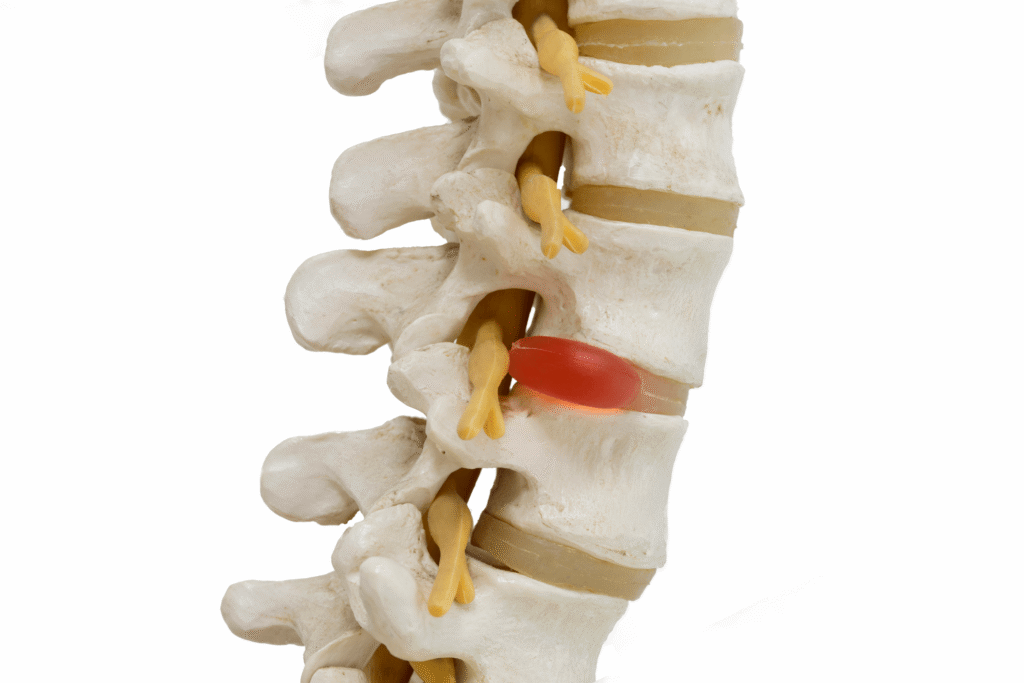
Your spine is made up of several small bones called vertebrae. In-between each bone is a small disc that acts as a cushion and helps with movement. These discs have a hard outer layer surrounding a squishy inner layer.
Sometimes, whether from a sudden injury or just because of degeneration over time, a tear can develop in the outer layer of a disc, allowing the inner layer to protrude out into the spinal canal. This is what’s known as a disc herniation. The protruding disc material can place pressure on the nerves around it, leading to pain, numbness, or weakness in the area where the nerves travel. The sciatic nerve, which runs from the buttocks down the back of the leg, is an example of a nerve that’s commonly affected.
Explaining the Microdiscectomy Procedure
When having surgery to repair a herniated disc, the goal is to remove the part of your disc that’s putting pressure on your nerves. Some doctors may use an endoscope, a long, thin tube with a camera that’s inserted into the incision, to perform this procedure. But I find that the best way to do this surgery is with a small incision and a microscope instead. This method is called a mini-open microdiscectomy, and I believe it gives me the best vision, mobility, and dexterity to effectively treat the problem while still keeping it minimally invasive.
The procedure is performed through a 1-inch incision on the back. Because the operative field is so small and deep, the microscope helps provide magnification. I carefully separate and open the muscles of the back, almost like a curtain, to reveal the spine. I then remove a nickel-sized portion of lamina, the bony part of the spine, to gain access to the herniated disc. Any fragmented or protruding pieces of the disc are removed. I’ll also check in and around the disc space to clear any fragments that could rupture in the future. The muscles are then returned to their normal place, and the incision is closed.
This is usually a same-day procedure. Patients may experience muscle soreness or some pain from the incision for the first week, but most find they recover quite quickly. If there’s any residual weakness, we may start physical therapy or a modified exercise regimen about four weeks after surgery.
Addressing Common Microdiscectomy Concerns
Many patients are worried about nerve damage from the procedure, such as foot drop, incontinence, or sexual dysfunction. I like to reassure them that this type of nerve damage is very rare.
Other risks of microdiscectomy include infection, bleeding, and leaking of spinal fluid. But even if these complications develop, they can usually be managed without any issues.
Overall, microdiscectomy is a good option for patients who have an otherwise healthy spine but are experiencing pain as a result of pressure on the spinal nerves. Compared to other more complex surgeries like a spinal fusion, a microdiscectomy help patients feel better while still preserving motion at all levels of the spine. Most patients are pleased with the improvement and go on to live their lives with high levels of physical activity.