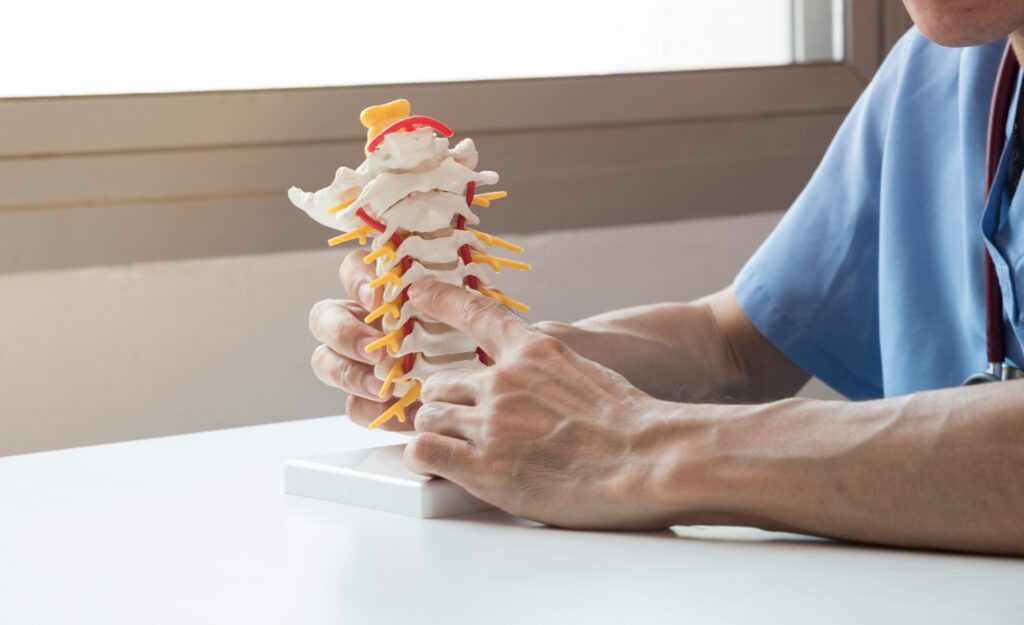
If you have been diagnosed with cervical degenerative disc disease, you are probably curious about your treatment options. The pain and disability that accompany a degenerated disc can impact daily life, causing chronic pain, numbness and tingling of the arms, and loss of function.
Fortunately, there are a range of treatment options aimed at alleviating pain, reducing symptoms, and restoring function. Let’s start with prevention.
Lifestyle Changes to Improve Cervical Disc Health
Cervical degenerative disc disease is not a disease in the sense that it is something you contract. Our discs naturally degenerate as we age, due to the normal wear and tear of life. Injury can also cause damage to the disc, producing tears which allow the fluid to leak out, reducing the disc’s effectiveness at cushioning the vertebrae and putting pressure on surrounding nerves.
However, there are measures you can take to slow the degenerative process and even reverse some of the damage caused by the breakdown of the disc. These measures include:
- Exercise: One of the best ways to maintain cervical disc health or improve the symptoms of degeneration. First, check with your doctor to ensure that you do not choose an activity that aggravates your condition. Generally, it is advised that you limit high-impact activities and heavy lifting. Light walking, daily stretching, and strength training can improve flexibility of the cervical joints and reduce pain and symptoms.
- Hydration: Not only distributes nutrients and removes waste, but it also helps maintain disc health, because discs lose water as we age, which reduces their cushioning effect.
- Quit smoking: Because nicotine interferes with the body’s ability to heal and inhibits bone growth. In addition, it can diminish oxygen delivery to the discs, which can result in accelerated deterioration of the discs.
- Eat healthy: By consuming less salt, moderating caffeine intake, and keeping alcohol consumption down. Include fruits, vegetables, and protein in your diet to maximize your body’s performance.
- Improve your posture: By holding your head up when you sit, walk, or read. Erect posture will take pressure off your discs by properly aligning your vertebrae, and it will prevent muscle strain.
Making simple changes to your daily routine can improve the health of your cervical discs, as well as your overall health.
Try Non-Surgical Treatment Options First
There are numerous non-surgical treatment options to try before contemplating spine surgery. You and your doctor should explore these routes before deciding to pursue a surgical alternative.
- Pain management: Narcotics (in moderation), NSAIDs (non-steroidal anti-inflammatory medications, such as ibuprofen), and steroid injections can alleviate pain while your body naturally heals.
- Rest: Simply resting the affected joint and avoiding aggravating activities can allow the body to heal on its own.
- Hot/Cold therapy: To reduce inflammation and pain.
- Physical therapy: To strengthen surrounding muscles and improve joint flexibility.
- Alternative therapies: Such as acupuncture and massage, which can reduce pain, break up scar tissue, and release muscle spasms, while allowing the body to heal naturally.
When Is It Time for Surgery?
There are several criteria that should be met before resorting to a surgical option. They include:
- Continued pain after several months of non-surgical treatments
- Increasing or debilitating pain
- Risk of nerve or spinal cord damage
- Pain that interferes with daily life
- Neuorological dysfunction
If you fall within these criteria despite having tried non-surgical options, it may be time for surgery.
What Are the Surgical Options for Correcting My Degenerated Disc?
There are three surgical procedures that are generally used to treat cervical degenerative disc disease. Here is a brief overview of each:
- Anterior Cervical Discectomy and Fusion (ACDF): ACDF is a procedure in which an incision is made in the front of the neck, the damaged disc is removed, a graft is put in its place, and the adjoining cervical vertebrae are fused together using a metal plate and screws. The procedure restores stability to the joint but eliminates flexibility at the site of the procedure.
- Cervical Artificial Disc Replacement (ADR): The damaged disc is removed and replaced by an artificial disc that mimics the natural disc by serving as a shock absorber for the vertebrae. The main advantages ADR has over ACDF are that it maintains flexibility of the cervical joints (instead of fusing them as a unit) and it eliminates the complications associated with bone grafting. Patients may experience a quicker recovery and lower the risk of wearing out adjacent levels of their neck in the future.
- Posterior Cervical Foraminotomy: This procedure can be considered when the degenerative disc disease has resulted in bone spurs compressing the nerves. This operation does not require any “parts” or “pieces”, and can be an effective, minimally invasive measure for relieving nerve pain.
The Benefits of Minimally Invasive Spinal Surgery (MISS)
If your doctor decides that surgery is the best option to correct your cervical degenerative disc disease, be sure to choose a surgeon who can offer a minimally invasive technique. Minimally invasive spinal surgery (MISS) has many benefits over standard spinal surgery, including:
- Smaller incisions, because the entire operation is done via microscopes
- Faster recovery, due to less trauma to the area
- Less down time, with the patient typically up and walking the day of the surgery
- No hospital stays, because MISS is performed on an outpatient basis
- Less risk of hospital-based infection
- Fewer pain medications required post-operatively
- Diminished risk of adjacent segment breakdown in the future
There are many treatment options to correct cervical degenerative disc disease, so consult a qualified specialist who can offer a range of alternative treatments. And if surgery is your best option, be sure you choose a specialist who can offer a minimally invasive procedure.