
The field of medicine is always evolving. Research is continuously underway to teach us not only how to treat different medical conditions, but how to do so safely and effectively. Here at DISC Sports & Spine Center, we apply that knowledge to the way we perform spine surgery. We strive to make you feel better while avoiding any potential complications.
For example, infection is a risk with any surgery, but research has helped us identify ways to minimize that risk. Here, we’ll cover some important facts about surgical site infections after spine surgery and discuss how a quality spine surgeon will use best practices to keep you safe during surgery.
Learning How to Lower the Risk of Surgical Site Infection Before Surgery
Research has demonstrated that certain patient-specific factors can increase your risk for infection after spinal surgery. Some significant examples include:
- Diabetes
- Obesity
- Smoking
- Substance abuse
- Malnutrition
Talk to your doctor if you have any of these risk factors. Your surgeon can help determine if there are ways to improve your health. For example, what can be done to help manage your diabetes and maintain stable blood sugars? Do you need assistance to quit smoking? Can you add healthy and nutritious foods into your diet? Especially if your spine surgery is elective, you may have time to modify some risk factors before the procedure.
If you fall into a higher-risk category, your surgeon may also suggest closer follow-up after surgery to ensure a good outcome.
Improving Protocols During Spine Surgery to Lower the Risk of Surgical Site Infection
Research has also shown us how surgical site infections occur and what types of surgical procedures are more likely to result in infection. This has led to the development of better protocols during surgery and safer methods of performing surgery to help decrease infections.
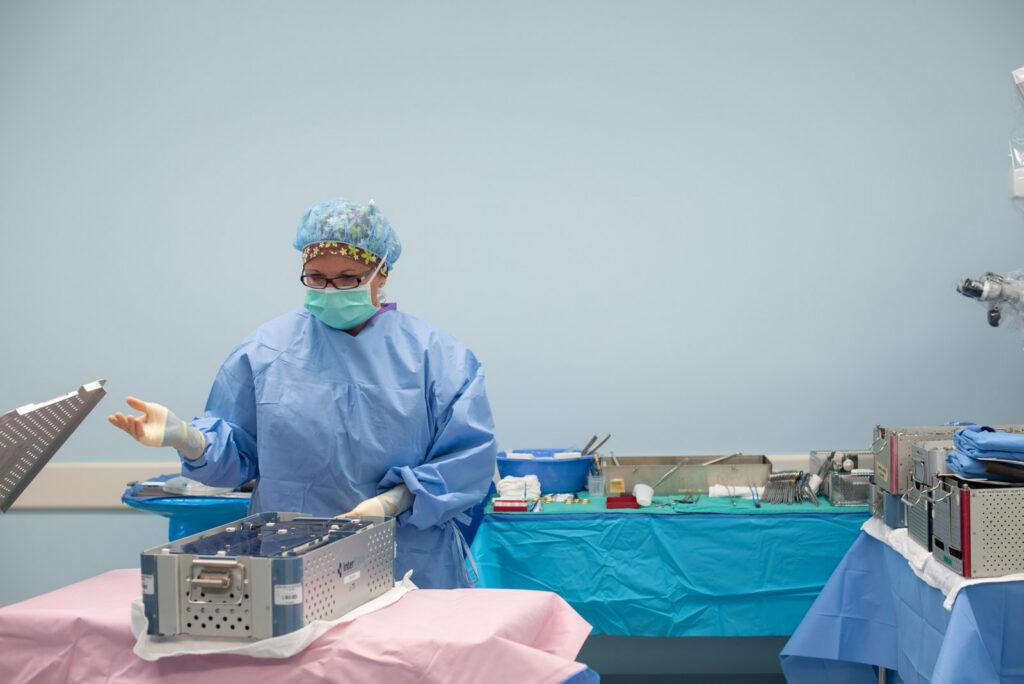
Surgical site infections can occur when a microorganism, such as Staph aureus or E. coli, enters the surgical incision. For this reason, your surgeon and surgical team apply the principles of aseptic technique during the procedure, meaning they follow specific steps to eliminate the spread of germs. Anything that comes into contact with your incision, from your surgeon’s gloved hands to the surgical equipment used during the procedure, should be kept sterile (germ-free) to avoid any contamination. Your skin is also prepped with a special cleanser to remove any bacteria or other microorganisms on its surface before the incision is made. Even outside of the surgical field, everything within the operating room, from the countertops to the flow of air, should be kept as clean as possible. Additionally, you may be given a short course of antibiotics prophylactically to help avoid infection.
We know that operations that take longer and are more invasive tend to have an increased risk of surgical site infections. However, with advances in minimally invasive spine surgeries, this risk can be reduced. Ask your surgeon if a minimally invasive procedure is appropriate for you and what protocols are in place to prevent infection during surgery.
Identifying Surgical Site Infections After Spine Surgery
In the rare case that a surgical site infection develops after surgery, early detection and proper treatment are crucial. We’ve learned from research that surgical site infections typically develop from two days to one month after surgery, but can occur up to three months postoperatively. Continuous back pain is a common indicator of infection. Redness, fever, fatigue, and warmth and drainage from the surgical wound are other frequently seen signs.
A quality spine surgeon will not only have a good postoperative follow-up protocol during that window of time, but will make sure you know how to recognize potential signs of infection after you’re discharged.
To date, at DISC Sports and Spine Center, we have a zero spinal surgery infection rate. From our use of minimally invasive procedures to our strict surgical protocols, our goal is to keep you infection-free. And it doesn’t stop after you go home. We’ll continue to monitor you postoperatively, and you’ll have access to an on-call doctor at all times should any concerns arise.
References
Chahoud, Jad et al. “Surgical site infections following spine surgery: eliminating the controversies in the diagnosis” Frontiers in medicine vol. 1 7. 24 Mar. 2014, doi:10.3389/fmed.2014.00007


