press

Knowing the Common Symptoms of Cervical Spinal Stenosis

Learn From Our Experts

Our practice combines the knowledge of world-renowned experts across specialties. See their take on the latest industry news and advice.
Spine

Knowing the Common Symptoms of Cervical Spinal Stenosis

Have you been suffering from neck pain? Neck pain is very common, and it can occur for a variety of reasons. Perhaps you slept in an uncomfortable position, or you strained a muscle in your neck while exercising. But what if you are noticing other troubling symptoms that leave you scratching your head, unsure if you should see a doctor? Here, we’ll describe a condition called cervical spinal stenosis. Read on to see if this sounds like what you’ve been experiencing. Cervical spinal stenosis occurs due to a narrowing of your spinal canal. Your spinal cord is made up of nerves that travel down your neck and back through an

Spine

When is Time to Have Surgery for Stenosis?

Spinal stenosis is a condition I encounter frequently in my practice as a spine surgeon. I sometimes see patients who have recently developed symptoms, such as leg pain while walking, and are coming to me for a diagnosis. I also have patients who have had spinal stenosis for some time and are noticing a progression of the disease, so they schedule an appointment to discuss new treatment options. But whether they are a new or an established patient, most people who come into my office want to know if surgery is needed to relieve their symptoms of spinal stenosis. Managing Spinal Stenosis Without Surgery Spinal stenosis occurs as the result

Patient Education

Is Cervical Spinal Stenosis Causing my Chronic Back Pain?

At DISC Sports and Spine Center, we recognize that determining the source of your back pain is essential to starting the right treatment plan. But with so many possible causes, you may not be sure what you’re dealing with. Here, we’ll discuss one cause of back pain—cervical spinal stenosis. Read on to see if this condition sounds similar to what you’re experiencing.   What Is Spinal Stenosis? It’s helpful to have a general understanding of your anatomy. Your spinal cord and spinal nerves run through small openings in the vertebrae, or bones, of your spine. Often (though not always), degenerative changes from aging cause those openings to narrow. This is

Patient Education

Spinal Stenosis Treatments and Surgery

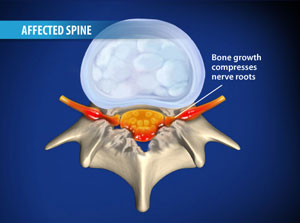
Treating Spinal Stenosis Spinal stenosis is a narrowing of canals in the spine. This may put pressure on the spinal cord and/or spinal nerves, causing a variety of painful symptoms. Spinal stenosis results from new bone and soft tissue growth on the vertebrae, which reduces the space in the spinal canal. When the nerve roots are pinched, a painful burning, tingling and/or numbing sensation is felt from the lower back down to the legs and sometimes all the way to the feet. About Spinal Stenosis: Background & Anatomy Two key components of the spine are the individual vertebrae and the spinal cord. Vertebrae are the interlocking bony structures of the

Patient Education

Spinal Stenosis Has Multiple Causes, Treatment Options

One form of back pain that many people have to suffer through is a condition called spinal stenosis.  Although attributable to a number of causes, the most common is simply aging.  The stress that accumulates on a person’s spinal cord over the course of years can manifest in stenosis, and it is important for individuals to gain a better grasp of the issue. Spinal Stenosis:  What Is It? First, one has to understand what the condition entails.  Stenosis stems from the canals that make up our vertebrae.  There are two types of canals to be aware of:  vertebral foramen, through which the spinal cord runs, and lateral foramen, which are

Patient Education

Spinal Stenosis Treatments and Surgery

Treating Spinal Stenosis Spinal stenosis is a narrowing of canals in the spine. This may put pressure on the spinal cord and/or spinal nerves, causing a variety of painful symptoms. Spinal stenosis results from new bone and soft tissue growth on the vertebrae, which reduces the space in the spinal canal. When the nerve roots are pinched, a painful burning, tingling and/or numbing sensation is felt from the lower back down to the legs and sometimes all the way to the feet. About Spinal Stenosis: Background & Anatomy Two key components of the spine are the individual vertebrae and the spinal cord. Vertebrae are the interlocking bony structures of the

Our Locations