
Don't live with pain. Call today about a better tomorrow.

You Are What You Eat: How Diet Can Help Chronic Pain Management

For those who suffer from chronic pain, there is a simple way to help manage your symptoms; a change in diet. Incorporating more foods that act as natural anti-inflammatories will help the body purify itself and decrease the amount of inflammation and thus pain. While there are many causes of chronic pain, adopting a healthier diet along with getting regular exercise and properly managing stress, have all shown to help decrease pain without the potentially negative side effects that occur when taking medication.

Generally, a healthier diet is one that is more vegan or Mediterranean based and is strictly followed. Vegetables and natural food sources are nutritionally denser and provide the body with more benefits than foods that have been enriched or modified. For an easy guideline there are three basics to know when attempting to create a diet that will aid in managing chronic pain:

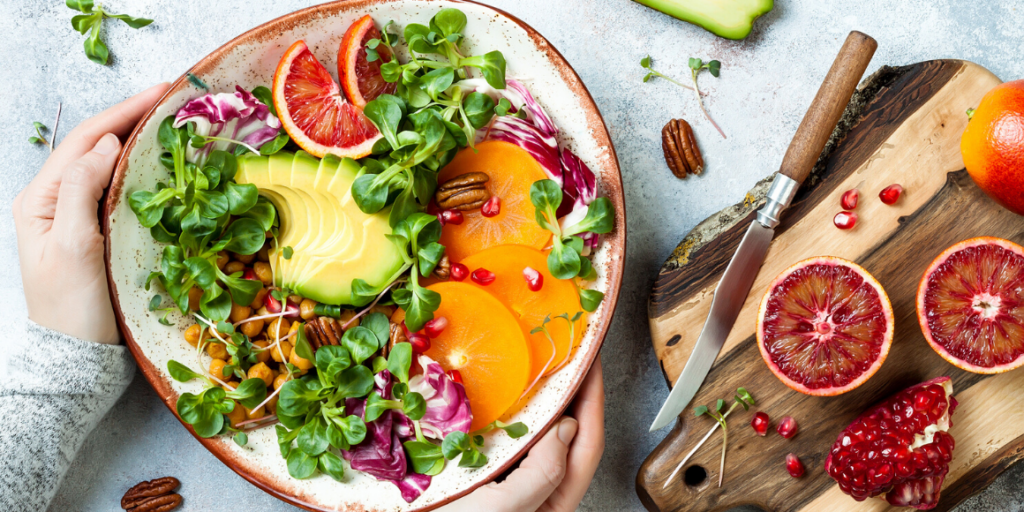
  • Eat the rainbow: Your plate should be full of different colored foods, mainly vegetables. The goal is to consume eight or nine servings of vegetables a day with the option to sub in fruits for a serving or two. Cruciferous vegetables are considered to be the best option, this includes broccoli, cauliflower, Brussels sprouts and cabbage.
  • Restrict dairy and grains: Dairy products should be consumed at a minimum and in limited quantities. Grains should only be consumed as whole grains such as oats, quinoa and brown rice. Special attention should be given so as to avoid simple carbohydrates altogether.
  • Avoid red meat: Read meat should be eaten rarely, if ever. It is recommended as a treat, or on a very special occasion but should be limited to only a handful of times a year.  Red meat can be substituted with fish, chicken or a vegetarian option. Fish has natural anti-inflammatory components while chicken is seen as neutral, neither harming nor helping you.

What is important to remember is that these are guidelines, or the foundation of a quality anti-inflammatory diet. Working within these parameters leaves you free to incorporate what you do like and leave out, or lessen the amount of, what you don’t. There is no one specific food that will make or break your goals, rather it is the combination of foods that work together to create the desired anti-inflammatory effect.

See how else diet can help with chronic pain

New call-to-action


ARTICLE CATEGORIES:

About the author

discmdgroup DISC Sports & Spine Center (DISC) is a national leader in minimally invasive spine surgery, orthopedic surgery, and sports medicine care. Our spine surgeons set the standard in artificial disc replacement, spine fusion, discectomy, microdiscectomy and the full spectrum of spine procedures. The group’s orthopedic surgeons advance the state of joint preservation surgery and total joint replacement, including total knee replacement as well as total hip replacement. Our flagship surgery centers based in Newport Beach, Marina del Rey, and Carlsbad serve patients local to Los Angeles, Orange County and San Diego, as well as the rest of the country. Read more articles by discmdgroup.

Request a Consultation

PLEASE PROVIDE SOME BASIC INFORMATION SO WE CAN FOLLOW UP

DISC Sports & Spine Center needs the contact information you provide to us to contact you about our products and services. You may unsubscribe from these communications at any time. For information on how to unsubscribe, as well as our privacy practices and commitment to protecting your privacy, please review our Privacy Policy.

Related Articles

Endoscopic Spine Surgery: A Complete Guide to Ultra-Minimally Invasive Spine Relief

Chronic back or neck pain caused by a herniated disc or spinal stenosis can significantly affect your quality of life. You may struggle to sit through a meeting, give up your favorite weekend hobbies, or feel a constant, exhausting ache down your leg. AtDISC, our spine surgeons are at the forefront of endoscopic spine surgery—the least invasive surgical technique available today. This ultra-minimally invasive approach is designed to treat the root cause of your pain while minimizing disruption to the surrounding muscles and soft tissues. In this guide, you will learn exactly what endoscopic spine surgery involves, who it helps,

Is Your Tote Bag Causing You Pain? Two DISC Spine Surgeons Weigh In.

Stiff neck? Achy shoulders? Stubborn knot in your upper back? If you’ve already ruled out bad sleep hygiene, tech neck or poor posture in the office, you may discover another culprit behind that nagging pain: The everyday tote bag—roomy, practical, and easy to overload—can quietly strain your spine, especially as its weight creeps up. Research shows that once a bag reaches around 15% of your body weight, its stress on your body rises significantly. How do you know if your tote is causing you grief? DISC orthopedic spine surgeons Steven Girdler, MD and Brandon Hirsch, MD recently shared their expertise

When to Consider Sciatica Surgery?

Sciatica pain is no joke. Originating in your lower back, it can radiate down your hips, buttocks, legs, and even into your feet. It can turn simple activities like walking, sitting, or sleeping into daily struggles. It’s estimated that about 40 percent of people will experience sciatica over the course of their lives, and for some, it can be quite debilitating. Though most cases will resolve over time with conservative treatment, persistent or severe sciatica often requires medical intervention. But how do you know if your sciatica is significant enough to warrant surgery? At DISC, we believe surgery should only

Don't live with pain. Call today about a better tomorrow.

Our Locations


