This blog was updated on May 13, 2019.
Sciatica Treatment Options
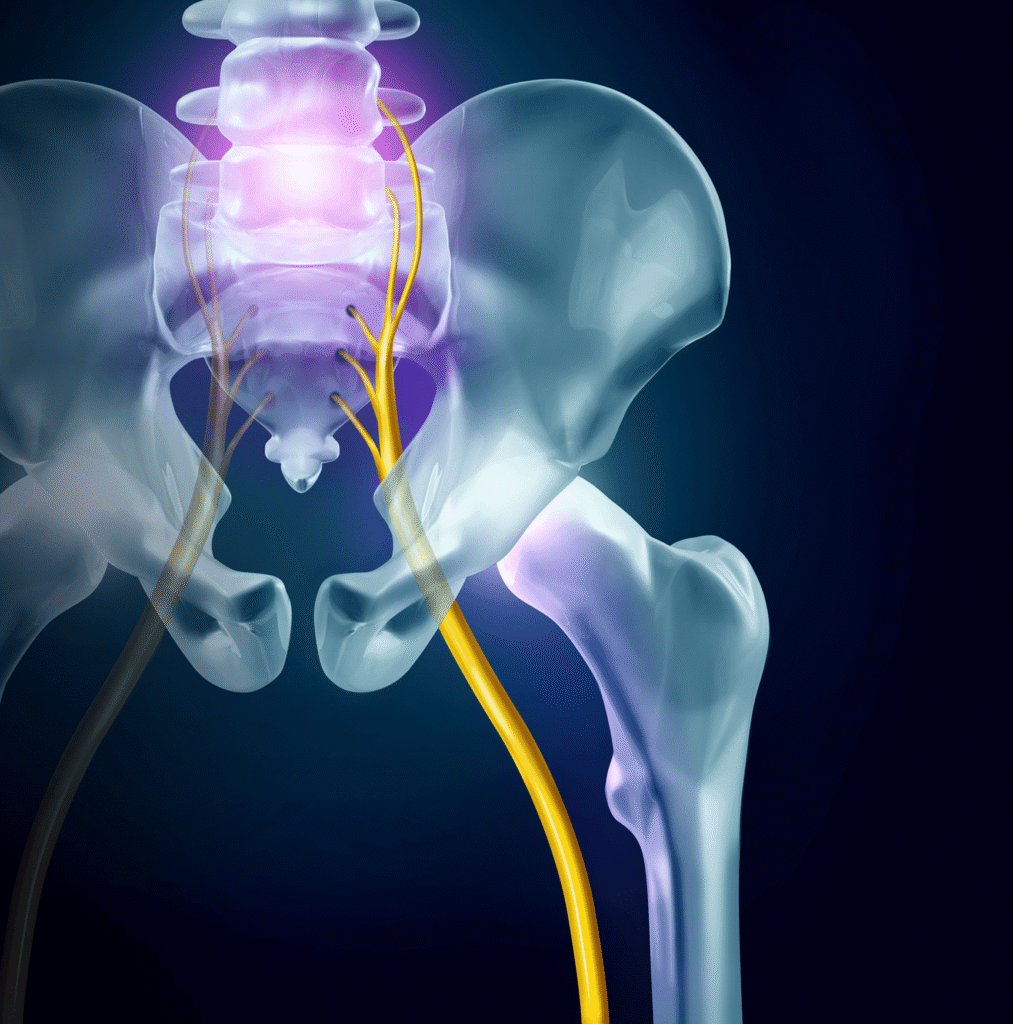
Lumbar microdiscectomy is a minimally invasive surgical procedure used to alleviate pain in the buttocks or leg, commonly known as sciatica, caused by a herniated intervertebral disc. By removing the herniated portion of the disc, lumbar microdiscectomy is 95-98 percent effective in eliminating sciatica symptoms.
An intervertebral disc sits between two adjacent vertebrae, acting like a shock absorber by redistributing forces incurred by the spinal column. The disc itself is composed of two distinct types of cartilage that form a self-contained unit. Damage to the disc, caused by wear and tear or sudden impact, can cause the disc to bulge, or herniate, out into the spinal canal where the spinal nerve roots are located. This nerve root compression can lead to sciatica in the leg and buttocks.
How Do You Treat Sciatica?
Most patients experiencing sciatica do not require surgery. Through soft tissue treatment, over-the-counter medication, pain management techniques, and other conservative methods, many patients find lasting relief. At DISC Sports & Spine Center, our doctors review every patient’s unique circumstances and explore all appropriate nonsurgical treatments.
In cases in which surgery is required, a lumbar microdiscectomy removes the section of intervertebral disc that has herniated into the spinal canal, leaving the healthy portion of the disc intact. It can be performed as an outpatient procedure, only requiring a small incision in the back. Muscle tissues are lifted off of the protective bony arch, called the lamina, and a window into the spinal canal is made. The nerve is gently pushed aside, allowing herniated tissue to be removed. Without the obstructing portion of disc, the nerve root can comfortably occupy the spinal canal and should cause no discomfort.
DISC surgeons perform microdiscectomies in an ultra-modern, industry-leading surgical center. DISC patients are dutifully cared for by dedicated staff and remain the top priority from admission to discharge. This level of service helps reduce microdiscectomy risks and improve recovery time.
What Does Microdiscectomy Post Op Entail?
Mild pain may occur at the incision site, but most patients report an immediate improvement in their sciatica symptoms. A typical recovery for microdiscectomy is about six weeks, with a continued increase in comfort during that time.
To improve recovery and lower the risk of reherniation, patients are advised to participate in a physical rehabilitation program. Proper microdiscectomy rehab will initially involve a light physical therapy regimen of stretching and core strengthening to minimize scarring of the nerve root. Higher-impact activities, such as jogging, may be resumed after three months. By six months post-op, a full range of physical activities is generally acceptable.
The DISC team of physicians works side by side with their patients through all stages of treatment—from diagnosis to rehabilitation.
How Much Does A Microdiscectomy Cost?
The cost of microdiscectomy surgery will vary based on a number of factors, such as:
- Severity of the damage
- Complexity of the procedure
- Patient’s medical history
- Insurance coverage
Because each case needs to be evaluated individually, the best way to determine overall costs is to speak with a DISC physician.
When Do I Consult a Physician for Sciatica?
Sciatica symptoms often get better with time, improving over 6-12 weeks. Any chronic pain in the leg or buttocks lasting longer than 12 weeks should be evaluated by a medical professional.
If a physician recommends a lumbar microdiscectomy, remember that it is a rapid, reliable way to treat a disc herniation and pain caused by an obstructed nerve root. Microdiscectomy has been shown to offer immediate relief from sciatica pain and to allow for a quick return to an active lifestyle.
DISC surgeons routinely perform microdiscectomies on an outpatient basis, with most patients returning home the same day. If you are ready to take a stand against sciatic pain, call today to schedule an appointment with a DISC specialist.
More information on microdiscectomy and the treatment of sciatica can be found here.